Lip Lift
Miami


Sometimes your upper lip can look thinner than you'd like. The space between the nose and upper lip may be naturally long, or it may lengthen gradually with age, causing less of the pink lip and upper teeth to show. A lip lift can subtly change those proportions by repositioning the upper lip rather than simply making it bigger. Dr. Gibstein plans each lip lift around your natural facial structure, with the goal of creating better balance while keeping your expression unmistakably your own.

A lip lift is a surgery that shortens the space between the base of your nose and your upper lip, called the philtrum. By removing a small, precise amount of skin and everting the upper lip, the procedure can show more of the pink part of your lip, make the Cupid's bow stand out more, and help your upper teeth show better.
A lip lift makes your lips look fuller without using fillers. If your upper lip looks long and thin because of its position, adjusting that surgically can be a far better solution than just adding volume.
Not every thin-looking lip needs more volume. If your upper lip is in a good position but just needs more fullness, dermal fillers might be the best choice. If your lip turns inward when you smile, a lip flip with a neuromodulator can help it roll outward a bit. But if your upper lip is long, the main issue is its position and proportion.
Dr. Gibstein will carefully evaluate your lip length, volume, how much of your upper teeth show, both at rest and when smiling before suggesting the proper individualized treatment for you. During a consultation, you can compare options like a lip lift, adding volume, or other non-surgical treatments based on your own features.

Depending on your anatomy, lip lift surgery may improve:
A lip lift doesn't increase the actual volume of your lips or fix every lip concern. In some cases, other lip procedures might be a better fit.

There's no perfect philtrum length for everyone. The best amount of lift depends on things like numerous factors: how much of your upper teeth show, the shape of your Cupid's bow, how your lips move with animation, your nose and lower lip shape and the overall balance of your face.
Even small changes can make a big difference in how your lips look. Conservative precise pre-op planning is essential to achieve an optimal outcome. Dr. Gibstein plans each surgery based on your proportions and aims for a natural look, not a one-size-fits-all approach.
The subnasal lip lift, often called a bullhorn lift, is the most common technique. Skin is removed beneath the nose so the upper lip can be elevated and rotated while the incision follows the natural crease along the base of the nose.
A central lip lift targets the middle of your upper lip and Cupid's bow, while a corner lip lift lifts the outer corners if they turn down. Other methods include direct or gull-wing lifts, Italian lifts, modified lifts, and V-Y techniques. The best method depends on your features and what you want to achieve.

When performed by itself, a lip lift is an outpatient surgical procedure under local anesthesia or intravenous sedation. If it's combined with a facelift or other surgical procedures, the anesthesia plan may be different.
Before surgery, Dr. Gibstein marks where the incision will go and how much skin to remove. He then moves the upper lip and closes it with fine stitches. The procedure usually takes about an hour or less. You may need to review your medications, avoid alcohol or anything that increases bleeding risk. Always talk to your doctor before changing any prescription medication.
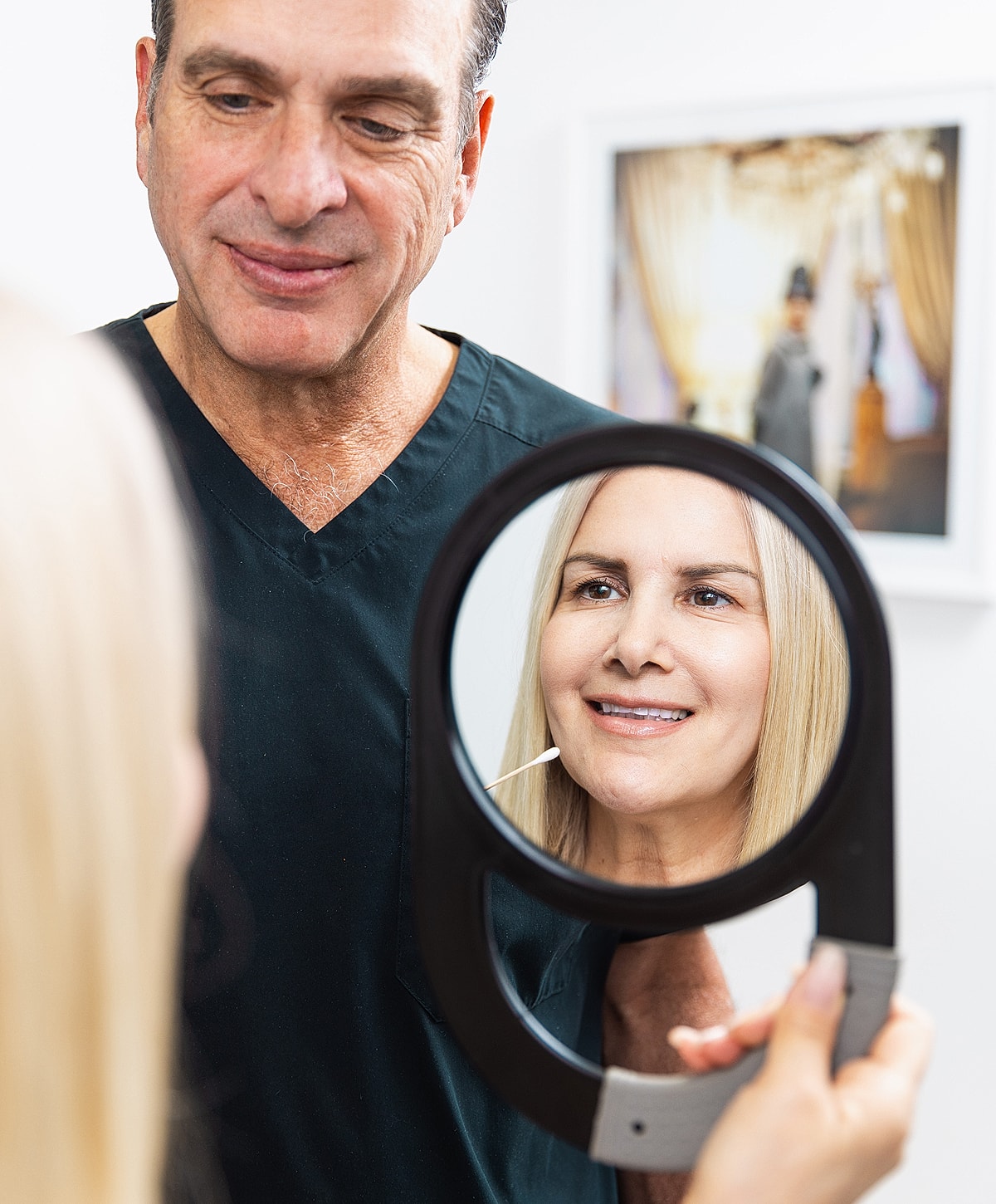
A lip lift does create a permanent scar. With a subnasal lip lift, the incision is typically placed along the natural crease at the base of the nose so it can become less conspicuous as healing progresses. It's normal to have some redness or firmness at first. Scarring can happen, and no surgeon can guarantee the scar will be invisible. Taking care of the wound and protecting it from the sun are especially important for good healing, especially in Miami.

You might be a good candidate for a lip lift if you have a long philtrum, not much visible upper lip, less upper-tooth show, or if aging has made the area between your nose and mouth longer. Most people should also be in good health and understand that the change is permanent and will leave a permanent scar.
A lip lift might not be right for you if you mainly want more volume or if your upper lip already shows a lot of your upper teeth. Dr. Gibstein can talk with you about whether you're a good candidate, where the scar will be, what recovery is like, what results to expect, and other options during your consultation.
Lip Lift | Lip Filler | Lip Flip | |
|---|---|---|---|
| Main change | Repositions upper lip | Adds volume and shape | Changes muscular pull |
| Shortens philtrum | Yes | No | No |
| Adds volume | No | Yes | No |
| Surgical | Yes | No | No |
| Results | Permanent structural change | Temporary | Temporary |
| External incision | Yes | No | No |
Lip fillers are a good option if you want more volume or a different shape, but they do need regular upkeep. A lip flip uses a neuromodulator to relax the muscle around your upper lip a little, softening lines and highlighting the lip border. A lip lift permanently changes the position of your lip. The best choice depends on what is causing your concern and your individual anatomy.

It's common to have swelling, discomfort, tightness, and mild bruising in the first few days after surgery. Swelling usually peaks at day three. Stitches are often removed after five to seven days. Many people go back to work and normal activities in about a week, but recovery time can vary. You might need to sleep with your head raised, avoid moving your mouth too much, and eat soft foods for a few days. You should wait about two to three weeks before doing strenuous exercise. Swelling will go down before your lips are fully healed.

A lip lift is permanent since the skin that is removed does not come back. You may see more of the pink part of your lip, more upper teeth when you smile, a more defined Cupid's bow, and a lip shape that matches your other facial features. You'll notice a change soon after surgery, but swelling can make the lift look more dramatic at first. Your lip will soften over the next few weeks and months, and it can take several months to see the final result. Your lips and nearby skin will still change naturally as you age.
Possible risks include infection, bruising, too much bleeding, changes in sensation, swelling that lasts longer than usual, uneven lips, visible scars, not enough or too much correction, and sometimes needing another surgery. There is also a chance of reacting to anesthesia. Before you decide, make sure you know where the incision will be, how much your lip will be lifted, what recovery involves, and what results you can realistically expect for your features.
Dr. Lee A. Gibstein is a double-board-certified plastic surgeon with more than 27 years of plastic surgery experience. His training includes plastic surgery residency at Harvard, Brigham and Children's Hospital, craniofacial fellowship training at Boston Children's Hospital, and aesthetic surgery fellowship training at Mount Sinai Hospital in Miami. A lip lift involves very small changes, but even a few millimeters can change how your nose, lips, teeth, and smile look together. Dr. Gibstein takes a personalized approach, focusing on natural results that balance with the rest of your face.
Yes. A lip lift permanently removes a measured amount of skin and changes the position of the upper lip. Natural aging continues, so the lips and surrounding facial tissues will still change over time.
A lip lift can create a fuller appearance, but it does not add volume.. It reveals more of the existing pink upper lip. Patients who primarily want additional volume may prefer lip fillers.
The procedure is often performed under local anesthesia when done alone. Mild soreness, swelling, tightness, and limited bruising are expected during early recovery..
Yes. A surgical lip lift creates a scar. With a subnasal or bullhorn lift, it is typically positioned beneath the nose within the natural crease. It usually becomes less noticeable with time, but visible scars remain possible.
Lip lift surgery usually takes about one hour or less when performed on its own. Timing varies with the technique and whether other procedures are performed at the same time.
Swelling is usually most noticeable during the first several days and improves during the first few weeks. The lip continues settling afterward, so final assessment takes longer than the initial recovery.
Yes, dermal fillers may still be an option once healing is complete if additional volume is desired to enhance your result.
Yes, a lip lift may be combined with a facelift or other facial rejuvenation procedures when appropriate. Combining procedures can change the anesthesia plan and recovery.
Lip lift cost varies with the surgical technique, anesthesia, and whether other procedures are performed at the same time. Because lip lift surgery is usually elective cosmetic surgery, health insurance does not cover it. Personalized pricing can be provided after your consultation and surgical plan is determined.